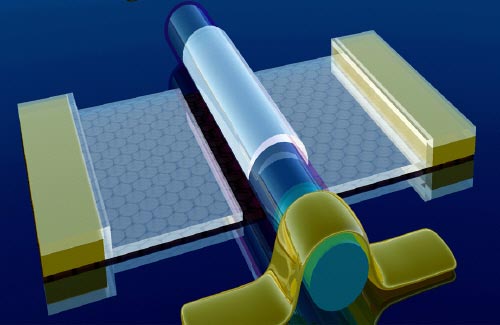
Graphene transistors are possibly the next in line for powerful circuits. The first graphene transistor was built in 2006. This early attempt showed graphene's potential; however there were still bugs to work out. In 2010 IBM made a graphene transistor that can operate at 100GHz. Some of the fastest silicon transistors operate at 20GHz. Graphene transistors are are also very small in comparison with silicon transistors. Graphene transistors being as small as 10 to 15 atoms across while powerful silicon transistors get down to around 20 nanometers. The major drawback on graphene transistors is that they cannot be turned off. They always conduct even in an off state. This greatly limits their current use to analog circuits. Overall the graphene transistor is not a substitute for silicon. Maybe with future innovations they can be applied on a larger scale, but today their strengths are eclipsed by their weaknesses.

Nice job in showing the strengths and weaknesses of the product (even though I have no idea what most of the information means, to someone that can understand it, I am sure it means something). The last sentence "...their strengths are eclipsed by their weaknesses." puts it into perspective of how effective this technology is in the industry, but also gives the product hope of being developed into something that can be used in the future.
ReplyDeleteSimilar to Kyle, I also had pretty much no idea what most of the information meant. Although, I do think that you did a pretty good job of contrasting the pros and cons of the resistor. Maybe some of the information could be explained better in terms that the rest of the class could understand, but good job other than that.
ReplyDeleteOne thing that might make the review better is a few examples of current uses for the transistors if there are any.
ReplyDeleteI thought the information on the graphene transistor was really interesting. I don't know much about transistors in general, but it was informational. However, I think it would have been more informational to the reader if you had included some more history of transistors themselves or some specific examples of their uses.
ReplyDeleteGreat job in laying out the pros and cons. I also like hows its short and to the point. One thing you might want to add is what kind of research are being done to improve the drawbacks
ReplyDelete